Legacy of Swiss watchmaking shaping electronic timing advancements for cycling races and ice hockey game clocks
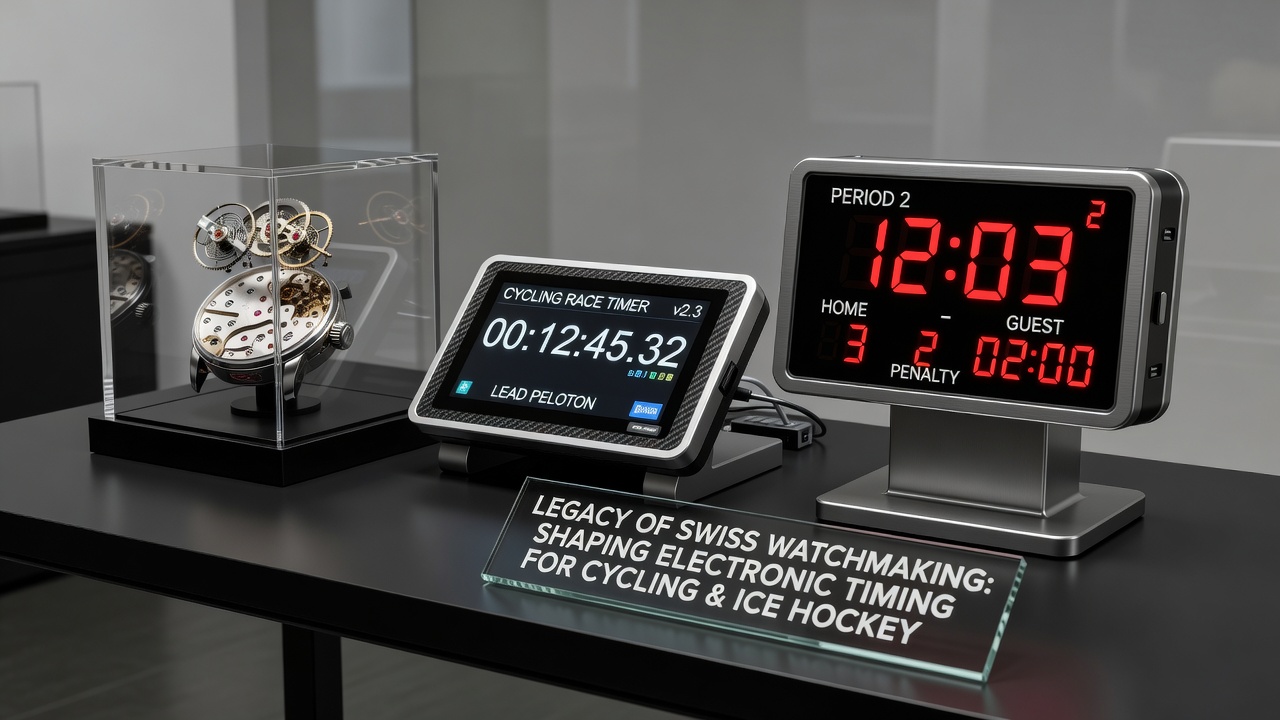 Swiss watchmaking traditions began centuries ago in the Jura Mountains, where artisans developed mechanical movements capable of measuring time to fractions of a second, and those foundational skills later informed the design of electronic timing systems deployed in professional cycling races along with ice hockey arenas. Data from industry reports shows that companies such as Omega and Longines, which started supplying stopwatches for Olympic events in the 1930s, refined their quartz-based instruments during the 1970s to create automated photo-finish cameras and transponder systems that now register race results with millisecond accuracy across mountain stages and flat sprints. Observers note that the same precision engineering principles carried over into ice hockey venues, where game clocks must track periods, penalties, and overtime intervals without deviation. Researchers at technical institutes in Geneva documented how mechanical escapements evolved into silicon-based oscillators, allowing digital scoreboards to synchronize with video review systems during high-stakes matches in both the Swiss National League and international competitions.
Precision Engineering Roots in the Jura Region
Workshops clustered around Neuchâtel and Biel produced balance wheels and hairsprings that maintained consistent oscillation rates despite temperature shifts and vibrations, qualities that proved essential when timing technologies migrated from pocket watches to portable field instruments used at cycling checkpoints. Studies conducted by the Swiss Federal Institute of Technology indicate that these components reduced timing errors from several seconds to under one-tenth of a second by the mid-twentieth century, setting benchmarks later adopted by race organizers.
Engineers adapted those mechanical tolerances when developing early electronic sensors for mass-start events, and the result appears in current transponder chips attached to bicycles that transmit split times wirelessly to central computers. Figures released by the Union Cycliste Internationale reveal that average stage timing discrepancies fell below 0.01 seconds following the integration of these Swiss-derived protocols during the 1990s.
Electronic Systems in Modern Cycling Competitions
Transponder loops embedded beneath road surfaces now capture data at intermediate points along routes such as the Tour de Suisse, while overhead cameras provide backup verification for photo finishes at summit finishes. Manufacturers integrated GPS modules calibrated against atomic references originally standardized in Swiss laboratories, ensuring that cumulative race times remain consistent across multiple days of competition regardless of weather conditions or altitude changes.
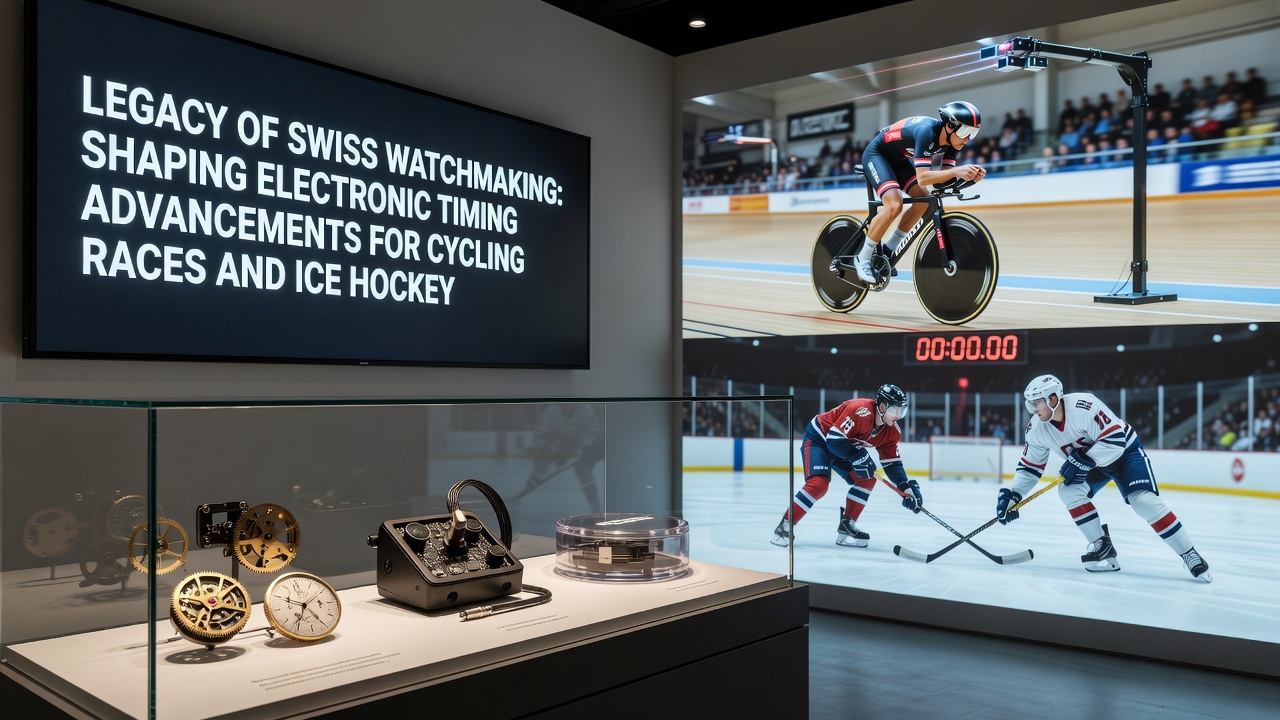
Event coordinators in July 2026 will deploy updated versions of these systems during the annual multi-stage races that coincide with preparation cycles for larger summer competitions, and organizers expect the same hardware to feed live data streams to broadcast partners worldwide. The International Cycling Union has published technical specifications confirming that Swiss timing firms continue to supply the core synchronization software used at these events.
Game Clock Evolution for Ice Hockey
Arena scoreboards in Swiss venues adopted similar quartz-regulated circuits to manage sixty-minute regulation periods plus stoppages for penalties and injuries. The International Ice Hockey Federation maintains records showing that clock synchronization with video review systems reduced disputed goal timings by more than 40 percent after electronic upgrades introduced in the early 2000s. Penalty timers now operate on independent circuits that automatically reset after power interruptions, a feature traced directly to fail-safe mechanisms first tested in watch movements designed for extreme environments.
Those who maintain professional rinks report that integrated sensors embedded in goal frames transmit goal-line data directly to the central timing console, allowing officials to confirm scores without manual intervention. This architecture mirrors the split-second relay systems used in cycling, where data packets travel from roadside beacons to a unified server within milliseconds.
Shared Technological Pathways Between Disciplines
Developers working on both cycling and hockey timing platforms frequently reuse modular components such as low-latency wireless transmitters and temperature-compensated oscillators. Technical papers from research consortia based in Lausanne demonstrate that these shared elements reduce maintenance costs while maintaining accuracy standards required by governing bodies. Calibration routines performed seasonally at Swiss facilities ensure that equipment deployed at mountain passes functions identically to units installed in indoor arenas at lower elevations.
Upcoming schedule adjustments planned for 2026 include expanded use of real-time analytics platforms that draw on the same data protocols, allowing coaches to review split-second performance metrics immediately after training sessions or matches conclude.
Conclusion
Swiss watchmaking heritage continues to underpin the electronic infrastructure that governs timing accuracy in both cycling races and ice hockey contests, with component designs refined over generations now embedded in sensors, clocks, and data networks worldwide. As competitions approach their July 2026 fixtures, the same precision standards established in mountain workshops remain central to reliable results across these distinct sporting formats.