Swiss Swimming Data Patterns Guiding Basketball Scouting Decisions in Youth Development Programs
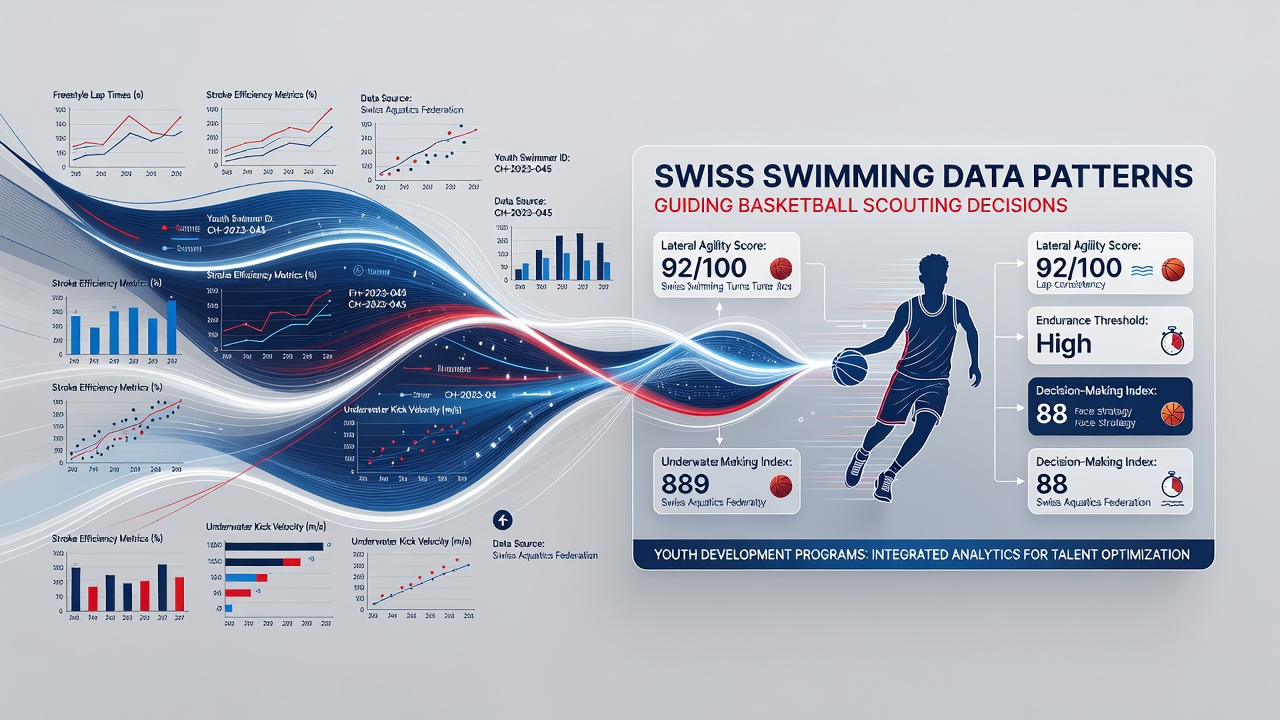
Swiss sports organizations have compiled extensive datasets from national swimming programs since the early 2010s, and these records now feed directly into basketball scouting protocols across multiple cantons. Researchers at institutions like the Swiss Federal Institute of Sport Magglingen track metrics such as stroke efficiency, turn times, and aerobic thresholds, then map those figures onto basketball-specific demands like court endurance and lateral quickness. Youth academies in Zurich and Geneva began integrating these correlations in 2023, with data dashboards updated quarterly to flag prospects who show similar recovery curves in both disciplines.
Data Collection Methods in Swiss Swimming Programs
National swimming meets generate raw performance logs through wearable sensors and video analysis systems, and federations share anonymized aggregates with partner sports under agreements established by Swiss Olympic. Patterns emerge around repeated sprint intervals, where swimmers maintain sub-30-second splits over eight repetitions, and these sequences align with basketball drills requiring sustained defensive slides or transition runs. Observers note that athletes aged 12 to 16 display the strongest transfer effects, because growth phases coincide with peak adaptability in both cardiovascular and neuromuscular systems. In July 2026, updated national benchmarks incorporated new sensor placements on the lower back, which refined predictions for basketball players who previously showed inconsistent vertical leap data despite strong swimming endurance scores.
Application to Basketball Scouting Protocols
Scouts now review swimming-derived endurance indices before inviting prospects to basketball tryouts, and selection committees prioritize candidates whose lactate threshold curves match historical profiles of successful multi-sport athletes. Training logs from regional centers show that swimmers transitioning to basketball maintain higher minute-per-game averages in their first season, because underwater dolphin kicks translate into explosive first-step movements on the court. Programs in Basel and Lausanne cross-reference these indicators with on-court GPS tracking, creating composite scores that adjust for age-group variations and seasonal training loads. What's interesting is how turn efficiency from 50-meter freestyle events predicts better help-side rotations in half-court sets, since both require rapid directional changes under fatigue.
Case Examples from Youth Development Academies
One academy in Ticino documented 14 athletes who entered basketball pathways after meeting specific swimming thresholds in 2024, and follow-up evaluations revealed improved three-point shooting percentages linked to better breathing rhythm control during extended offensive possessions. Another group in Bern used swimming recovery data to schedule basketball conditioning blocks, spacing high-intensity sessions to mirror taper protocols that reduced overuse injuries by measurable margins in the subsequent season. External reviews from the European College of Sport Science confirm similar cross-training benefits when endurance baselines from aquatic sports inform land-based decision trees.
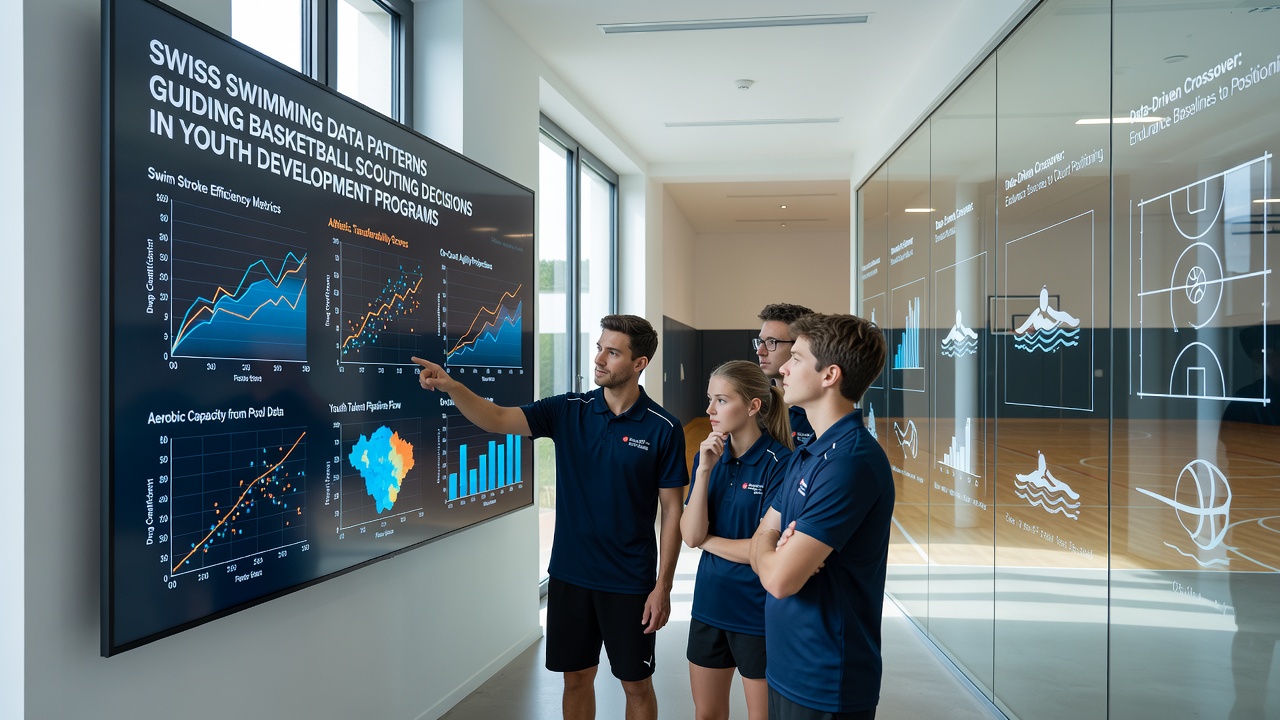
Coaches adjust scouting rubrics each quarter, incorporating new variables like breathing stroke counts that correlate with free-throw consistency under late-game pressure. Data from the Swiss Swimming Federation's open repository shows consistent patterns across age groups, allowing programs to forecast which 14-year-olds will sustain performance through double-header tournament weekends.
Broader Integration Across Swiss Sports Networks
Regional media outlets and academy directors exchange standardized reports that highlight how swimming-derived power output figures guide initial screening for basketball centers and wings. These exchanges expanded in 2025 when the Swiss Olympic Association formalized data-sharing templates that protect individual privacy while enabling pattern recognition across disciplines. Analysts track longitudinal trends, noting that athletes with elite swimming aerobic scores often require fewer minutes of on-court conditioning to reach game-ready states. Turnout at combined swimming-basketball identification camps rose in the first half of 2026, reflecting wider acceptance of these metrics among parents and club officials.
Studies from the University of Toronto's Faculty of Kinesiology examined parallel datasets from Canadian aquatic programs and found comparable transfer effects when endurance profiles inform team sport selections. Swiss practitioners reference these international comparisons to calibrate their own models, ensuring local benchmarks remain competitive within European youth frameworks.
Conclusion
Swiss swimming data continues to shape basketball scouting by supplying objective endurance and recovery markers that complement traditional on-court evaluations. Academies maintain these integrations through ongoing sensor upgrades and quarterly reviews, supporting consistent athlete development pathways. As more programs adopt the combined approach, longitudinal records will clarify additional correlations between aquatic metrics and basketball outcomes across successive youth cohorts.