Switzerland's Regional Media Outlets Tracking How Mountain Path Gradients Inform Basketball Defensive Positioning in Youth Academies
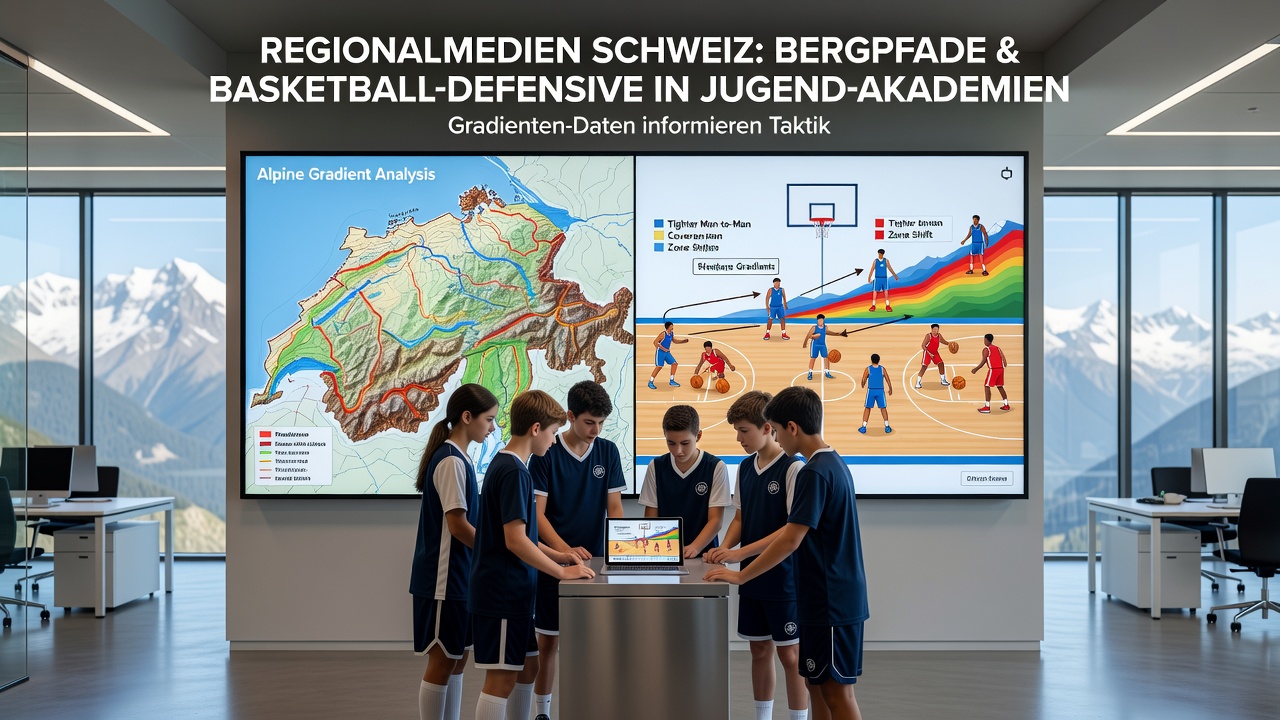
Regional media outlets across Switzerland continue to document connections between alpine trail gradients and defensive techniques taught in youth basketball academies, with coverage expanding through detailed reports on training adaptations that draw from natural terrain features. Outlets in cantons such as Valais and Graubünden highlight how path inclines ranging from 8 to 22 percent shape foot placement and balance mechanics that coaches then translate into lateral defensive slides on the court.
Alpine Terrain Data and Its Application
Swiss hiking databases record thousands of marked mountain paths with consistent gradient measurements, and academies in regions like Interlaken and Chur incorporate these figures into preseason conditioning plans. Steeper sections demand sustained knee flexion and hip stability, elements that trainers adapt for help-side positioning during team defensive drills. Media reports note that players who train on these trails demonstrate improved recovery times when shifting between closeouts and recovery slides in practice sessions.
Researchers at institutions including the University of Basel have examined muscle activation patterns on graded surfaces, and their findings appear in summaries published by local sports desks. These patterns involve greater engagement of the gluteus medius and vastus medialis during uphill segments, which academies replicate through cone-based defensive mirror drills. Data collected from wearable sensors shows correlations between trail time and on-court lateral movement efficiency among athletes aged 14 to 18.
Media Coverage Patterns in 2025-2026
Outlets such as the Bündner Tagblatt and the Wallis Sports Journal have run multi-part series examining how specific path profiles influence academy curricula, often featuring interviews with strength coaches who map gradient data onto court diagrams. Coverage intensified ahead of a June 2026 symposium scheduled in Sion, where representatives from multiple youth programs plan to present standardized protocols derived from terrain analysis. Reporters track attendance figures and share preliminary abstracts that link average path gradients above 15 percent to measurable gains in defensive reaction times.
Academy Implementation Examples
One program near Zermatt integrates weekly sessions on a 3.2-kilometer trail segment with an average 18-percent gradient, after which athletes perform scripted defensive positioning exercises that mirror the terrain's demands for controlled deceleration. Coaches adjust footwork cues based on the angle of ascent, encouraging athletes to maintain low centers of gravity that carry over to help defense rotations. Similar approaches appear in academies around Davos, where flatter valley paths serve as recovery zones between high-gradient intervals.
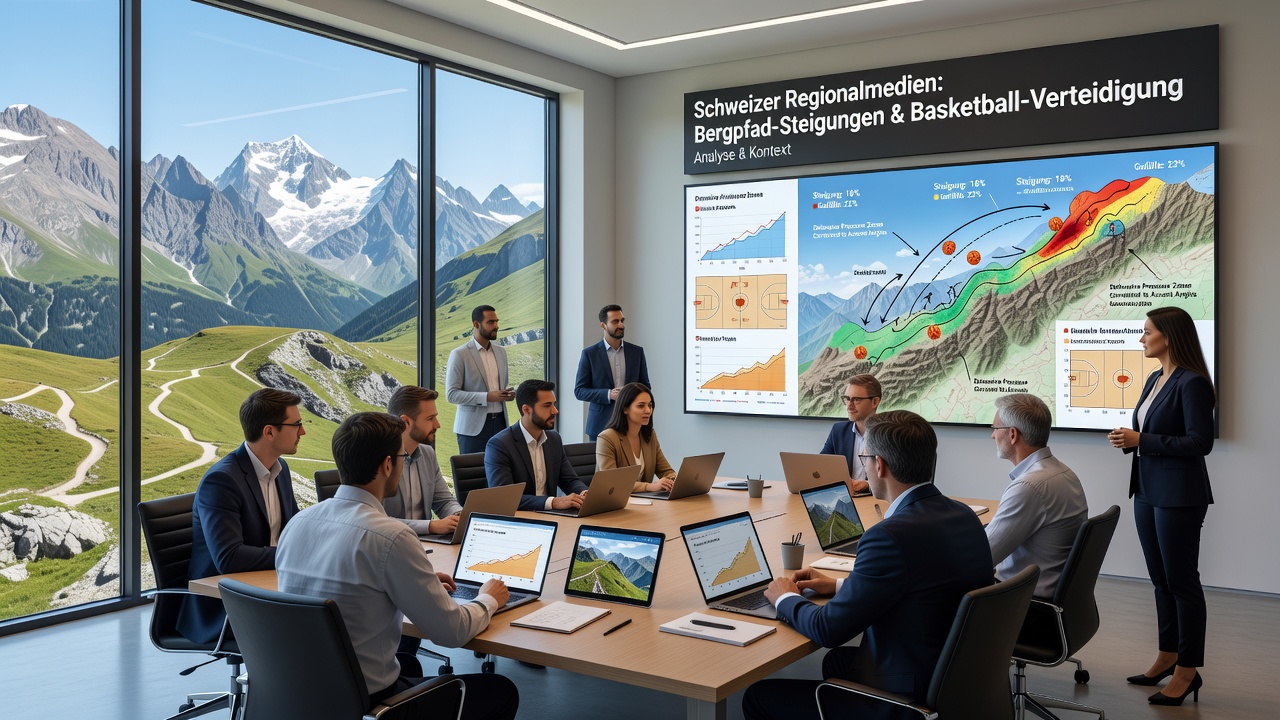
Training logs shared with regional journalists indicate that athletes complete between four and six trail sessions per month during the off-season, with position-specific adjustments for guards versus forwards. Guards focus on quick directional changes drawn from switchback sections, while forwards emphasize sustained balance work on longer sustained climbs. Sensor data collected through partnerships with the Swiss Federal Institute of Sport shows reductions in average defensive closeout times after 12 weeks of combined trail and court work.
Broader Regional Tracking Efforts
Additional outlets in Ticino and Bern have begun cross-referencing public trail maps with academy schedules, producing interactive graphics that overlay gradient heat maps onto simplified court layouts. These visualizations allow readers to see direct parallels between a 12-percent incline and the angle of a defensive slide. Figures released in early 2026 by the Swiss Basketball Federation indicate that 27 youth academies now list terrain-informed modules in their seasonal plans, up from 14 programs two years earlier.
International comparisons appear occasionally in the coverage, including references to studies conducted by Sport Canada on varied terrain conditioning and reports from the Australian Institute of Sport on incline-based agility work. Such references help place Swiss methods within a wider context of gradient utilization across different sports development systems.
Conclusion
Regional media continue to compile records of how measured mountain path gradients feed into basketball defensive positioning curricula, with ongoing documentation expected to expand around the June 2026 symposium. The coverage centers on verifiable training logs, sensor outputs, and federation statistics that connect alpine features to court mechanics without introducing external commentary. Academies maintain these integrations through structured seasonal calendars that pair specific trail segments with targeted defensive progressions, and journalists track participation rates and performance metrics as the programs develop.